Monday, September 14, 2015

Kairos's Influence on History

Today in class when we started talking about kairos, the so-called "window of opportunity" when it is the best time and place to introduce an argument, I though immediately of the story of Claudette Colvin. While many of you may not have heard of Ms. Colvin, you might have if her story had ended differently.

On March 2, 1955 Claudette was seated in the back of a segregated bus on her way home from school in Montgomery, Alabama. That day the bus was particularly crowded and more people were getting on with each stop. When the bus had run out of seats for an incoming white woman the bus driver ordered Claudette to move. She refused, saying, "This is my constitutional right...you have no right to do this." The bus driver threatened to call a policeman, but Claudette still would not relent. Eventually, she was forcibly removed from the bus and arrested.

This story might sound familiar because Rosa Parks, Secretary of the NAACP, would go on to do the same thing in the same city nine months later. So why is it Parks - not Colvin - who we learn about in school, read about in books, and honor during Black History month? The short answer is kairos. At the time that Colvin was arrested, she was an unmarried teen who was pregnant with her first child. The NAACP decided she was too much of wildcard to be an emblem of their cause. They later settled on Rosa Parks as an ideal candidate because she was a more virtuous and humble figure.

If the timing had been different and Colvin had already had her child or the NAACP had been less sensitive to social norms and had decided to back Colvin in her case, the Civil Rights Movement might have had a very different flavor. Instead of having an older figure as its symbol - someone who was tired of giving in - the movement might have been characterized by young, fiery Claudette Colvin who was determined to stand up for her rights no matter the risk involved.
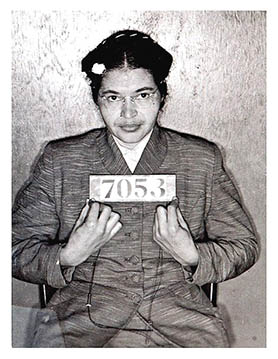
Rosa Parks arrested in 1955,
9 months after Claudette Colvin

I find this so interesting because kairos can literally change the story of history. Many times a precursor to some of our most important discoveries was ignored because it was the wrong timing. But if we look back, many of these earlier events have shaped our actions today. In an argument, if we didn't say something at the right time, we can hold on to our comeback. We may even be better prepared to use it in the future. Kairos enables us to take advantage of a situation and manipulate it to get the result we want. The NAACP used Rosa Park's kairotic moment to trigger a movement that helped liberate a whole people. If all of us can learn to use kairos to our advantage, we can be better communicators and civic leaders.

Thursday, September 3, 2015

My first blog post...about another blog?

Passion Blog Ideas:

David Brooks, Columnist for
The New York Times
nytimes.com
My first idea is to respond every week to an editorial written by one of the columnists for The New York Times. The blog would include analyzing how and why they wrote the post (e.g. what kind of rhetorical techniques did they use? Ethos, pathos, or logos? Did they use imagery or startling facts?) as well as my personal reaction to what they are saying. I would probably pick David Brooks (check him out here) who I have followed in the past. I like interacting with his work because he is conservative, but he often plays the middle ground. Since I consider myself to be slightly more liberal, I like responding and critiquing his arguments. I think this will also be an exciting topic because the 2016 presidential election is fast approaching and there is already a lot of information out about the different competitors from both parties.


Stephen Colbert, New Host of The Late Show
My second idea is to follow The Late Show with Stephen Colbert and to analyze what rhetorical strategies he uses to convince his audience of his arguments. I would also reflect on the content including his ideas and his criticisms of the right wing. I am super excited to see this show after seeing Mr. Colbert's performance on The Colbert Report. It will be interesting to see him acting as himself.


My third idea is to write about hidden gem movies and TV shows from the 1960s and 1970s like "Get Smart" (the TV show, not the remake movie), "Stripes," "Airplane!," "Animal House," and more. I would analyze the events happening during the time periods when these movies (or shows) aired and how that context helps us understand and appreciate them beyond the surface-level humor.


Please give me some feedback on which one you think I should do. Thanks!