On March 2, 1955 Claudette was seated in the back of a segregated bus on her way home from school in Montgomery, Alabama. That day the bus was particularly crowded and more people were getting on with each stop. When the bus had run out of seats for an incoming white woman the bus driver ordered Claudette to move. She refused, saying, "This is my constitutional right...you have no right to do this." The bus driver threatened to call a policeman, but Claudette still would not relent. Eventually, she was forcibly removed from the bus and arrested.

If the timing had been different and Colvin had already had her child or the NAACP had been less sensitive to social norms and had decided to back Colvin in her case, the Civil Rights Movement might have had a very different flavor. Instead of having an older figure as its symbol - someone who was tired of giving in - the movement might have been characterized by young, fiery Claudette Colvin who was determined to stand up for her rights no matter the risk involved.
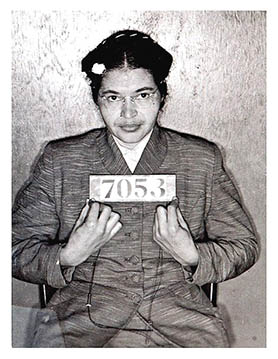 |
| Rosa Parks arrested in 1955, 9 months after Claudette Colvin |
I find this so interesting because kairos can literally change the story of history. Many times a precursor to some of our most important discoveries was ignored because it was the wrong timing. But if we look back, many of these earlier events have shaped our actions today. In an argument, if we didn't say something at the right time, we can hold on to our comeback. We may even be better prepared to use it in the future. Kairos enables us to take advantage of a situation and manipulate it to get the result we want. The NAACP used Rosa Park's kairotic moment to trigger a movement that helped liberate a whole people. If all of us can learn to use kairos to our advantage, we can be better communicators and civic leaders.

No comments:
Post a Comment